

Who Will Weave the Next Kanjivaram? Kanchipuram Weavers and Why Handloom Matters
26 November 2026

There are fewer handloom weavers in Tamil Nadu than a decade ago. What the census shows, handloom vs powerloom, and what it means for Kanchipuram weavers.
Walk down a weaving street in Kanchipuram early in the morning and you will hear it before you see it: the soft knock of a beater, the slide of a shuttle, a pause, then the rhythm again. For centuries that sound has belonged to Kanchipuram weavers. A recent essay asked a question that every lover of Kanjivaram silk should sit with for a moment: who will weave the next one?
This post looks at what the numbers say, why so many young people are stepping away from the loom, how to tell genuine handloom from a powerloom copy, and what you, as a buyer, can actually do about it.
What the Handloom Census Tells Us
India counts its handloom workforce through the All India Handloom Census. According to figures the Ministry of Textiles has given in Parliament, the Third Census (2009-10) recorded about 43.3 lakh handloom weavers and allied workers across the country. The Fourth Census (2019-20) recorded about 35.2 lakh. That is nearly one in five gone in a decade.
Tamil Nadu fell further. Handloom weavers and allied workers in the state went from about 3.5 lakh to about 2.4 lakh over the same ten years, a drop of almost a third. The census counts people, not looms, but the direction is clear.
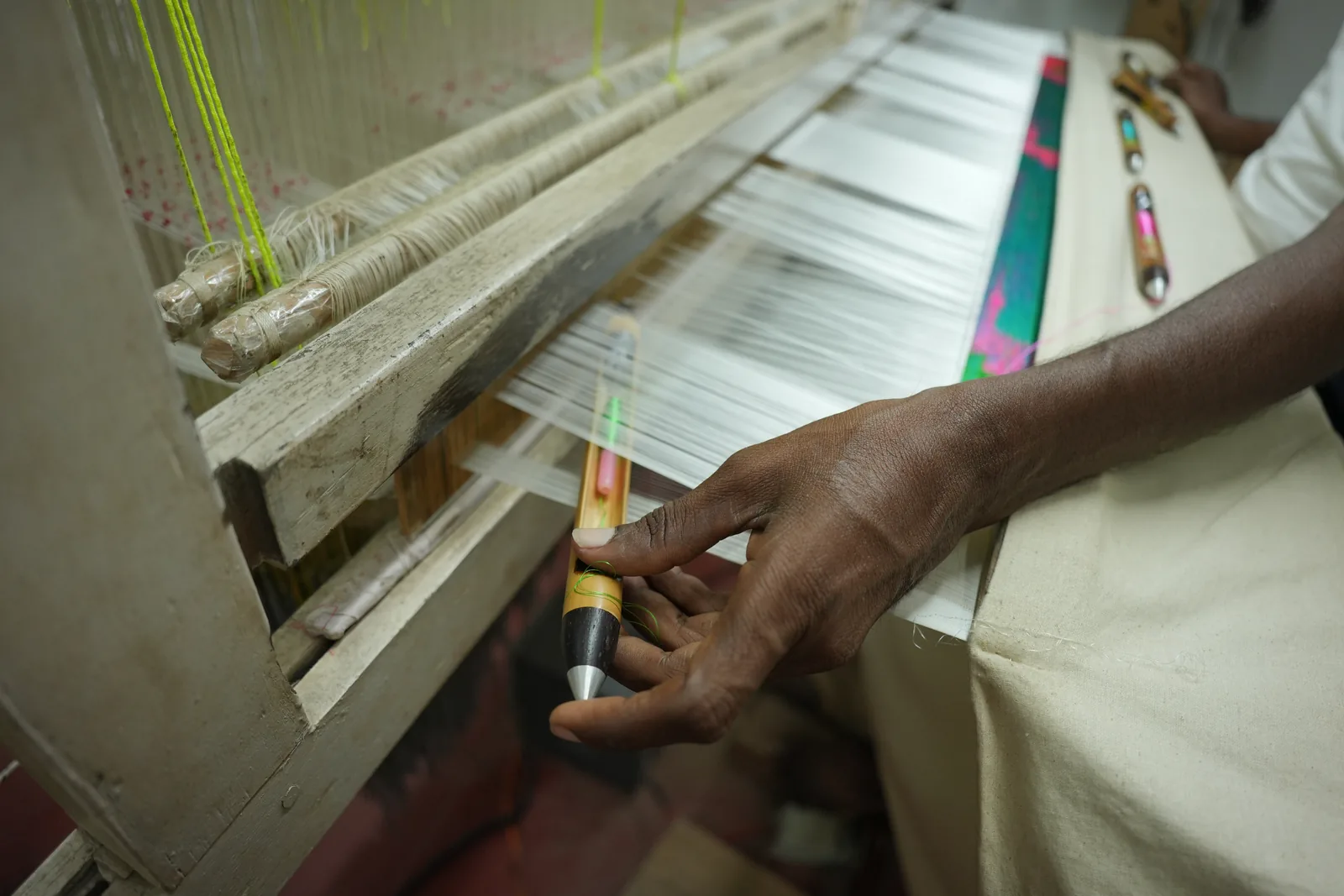
Kanchipuram Weavers and the Pull Away From the Loom
In The Textile Notebook (13 November 2026), writer Pritha Choudhury describes her conversations with weaving families in Kanchipuram. Demand for Kanjivaram silk looks strong from the outside. Inside the weaving homes, she heard about incomes that have barely moved in years, payments that arrive late, and children who are choosing college, office jobs and government posts instead of the loom.
It is hard to blame them. Weaving asks for years of practice, long hours of focus and steady hands, and the reward has not kept pace. The master weavers she spoke with estimate that only a very small share of weavers still know some of the most specialised Kanjivaram techniques.
The quiet harm of powerloom copies
The same essay points to another pressure. Powerloom fabric, made far faster and far more cheaply, is sometimes sold with a handloom label and at a handloom price. A buyer who pays for handwork and receives a machine copy loses money. The weaver loses more: the sale, and the fair price the real work deserves.
Handloom vs Powerloom: Four Honest Pointers
You do not need to be an expert to buy with more confidence. These simple checks help.
1. Look for the Handloom Mark. The Handloom Mark is a Government of India scheme, launched in 2006, that tells you a product was woven on a handloom. The Silk Mark is also worth looking for, but it certifies pure silk, not handwork. The two together tell you much more than either alone.
2. Buy from someone who can show you the loom. A seller who works with weavers directly can tell you where the piece was woven and by whom, and will happily show you the loom. If those questions get vague answers, take note.
3. Look closely at the weave. Handwoven cloth can show tiny variations. Skilled weavers also produce very even work, so treat this only as a supporting clue.
4. Ask whether the price makes sense. Handloom takes time. If a price seems far too low for the work a piece would need, it probably was not woven by hand.
Our guide on how to check genuine Kanjivaram silk wall art goes into more detail.

Why Buy Handloom? Demand Keeps Looms Working
When you choose genuine handloom, the money goes to work that only a weaver can do. That is the simplest answer to the question in the title. Looms keep working when people keep asking for what they make, and pay what it is worth.
That demand can take other forms too. A framed woven artwork is another way to keep a loom busy. At SilkenFrame, every piece is woven on a handloom by master weavers in Kanchipuram, in pure Kanjivaram silk with gold zari. It is woven as an artwork from the first thread, and each piece carries the Silk Mark and the Handloom Mark. An XL piece takes about 2 days on the loom.
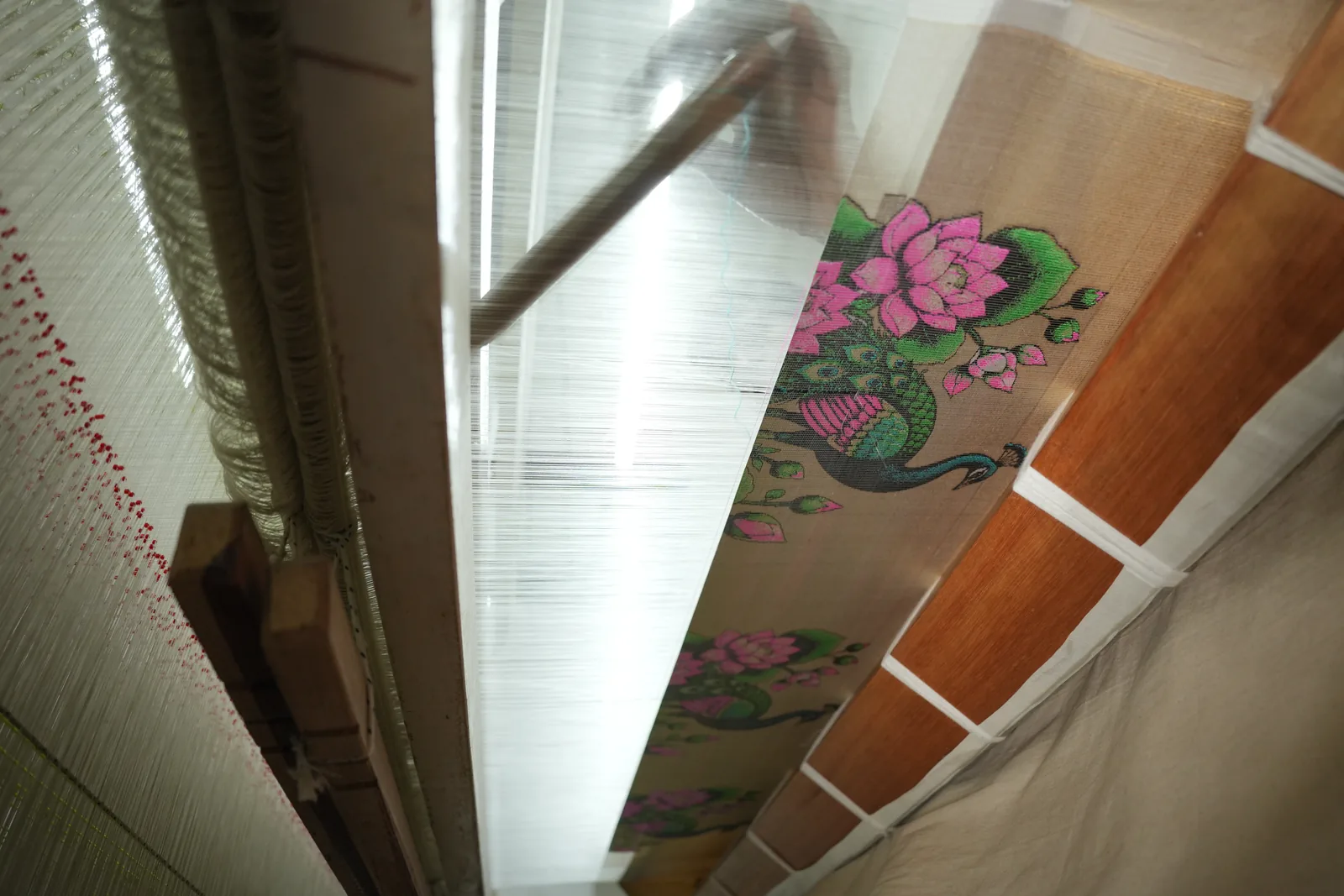
Hung on a wall, that work stays in view every day. It reminds you, and everyone who visits, that someone sat at a loom and made it row by row. To follow a piece from silk thread to frame, read how our Kanjivaram silk wall art is woven, or see our process and certificates.
Choose Handloom, Keep the Looms Working
The best answer to "who will weave the next Kanjivaram?" may be the people who choose to buy one. If you would like to see our handwoven pieces up close, you are welcome at our gallery in Kanchipuram, by appointment. Or message us on WhatsApp at +91 962 962 8679 (support all day) with any question about our framed silk wall art. Shipping is free across India.
 Share on WhatsApp